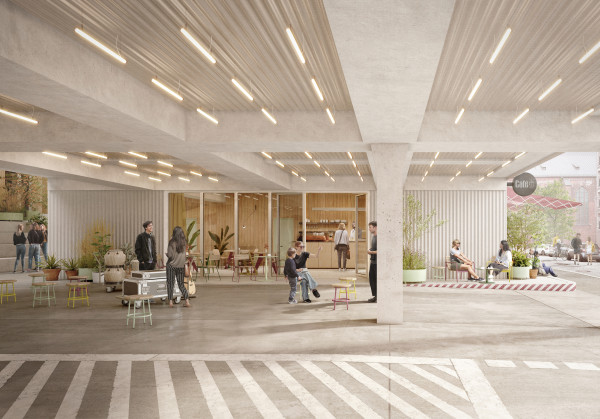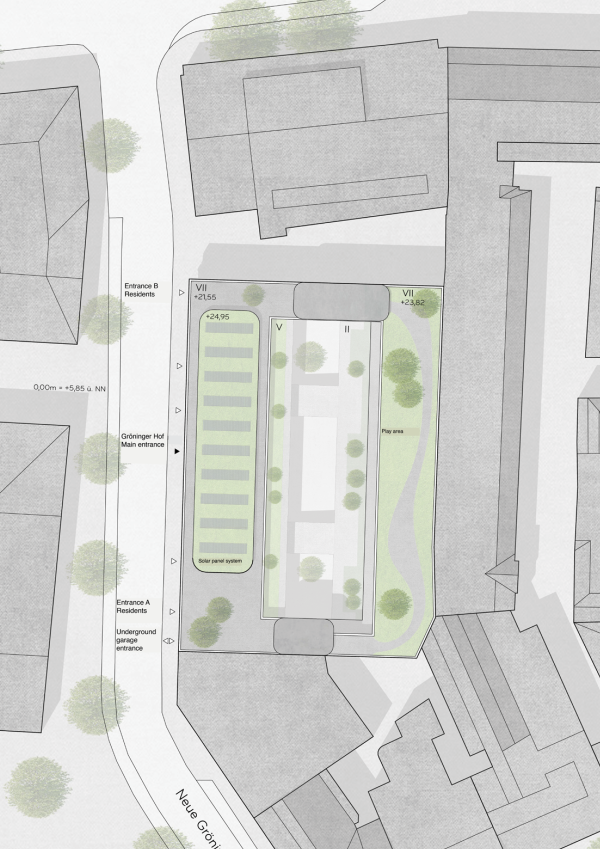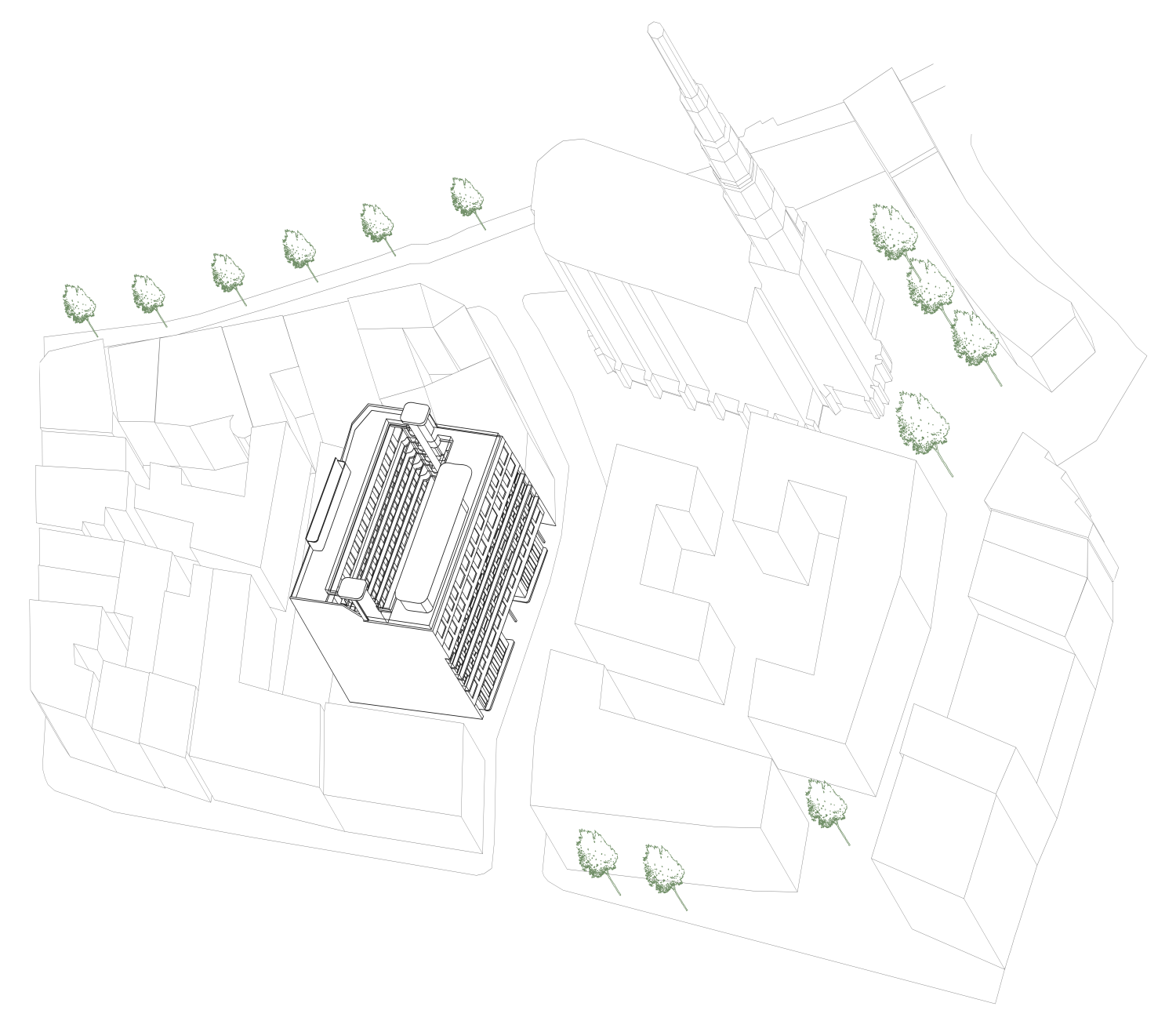
Location: Neue Gröningerstraße 12, 20457 Hamburg, Germany
Project type: Cooperative housing and adaptive reuse
Previous use: Multi-storey car park
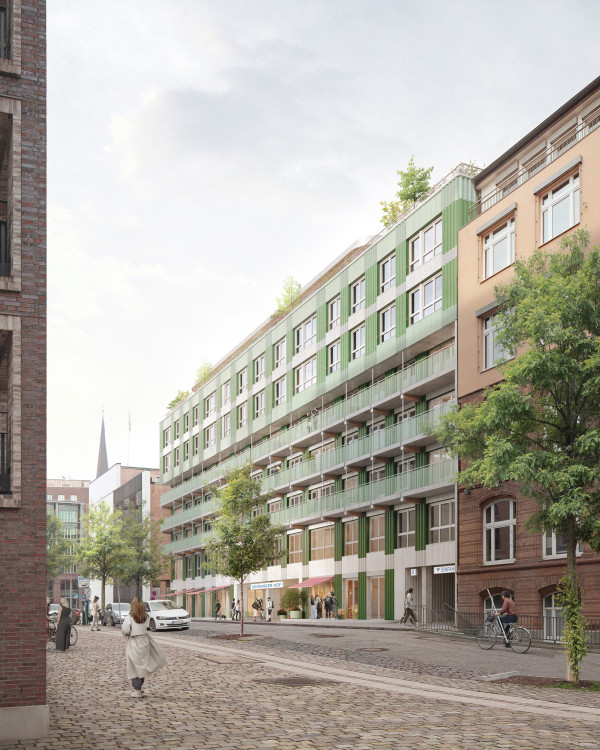
Current programme: Approximately 90 permanently affordable apartments, shared community facilities, commercial spaces and publicly accessible programmes
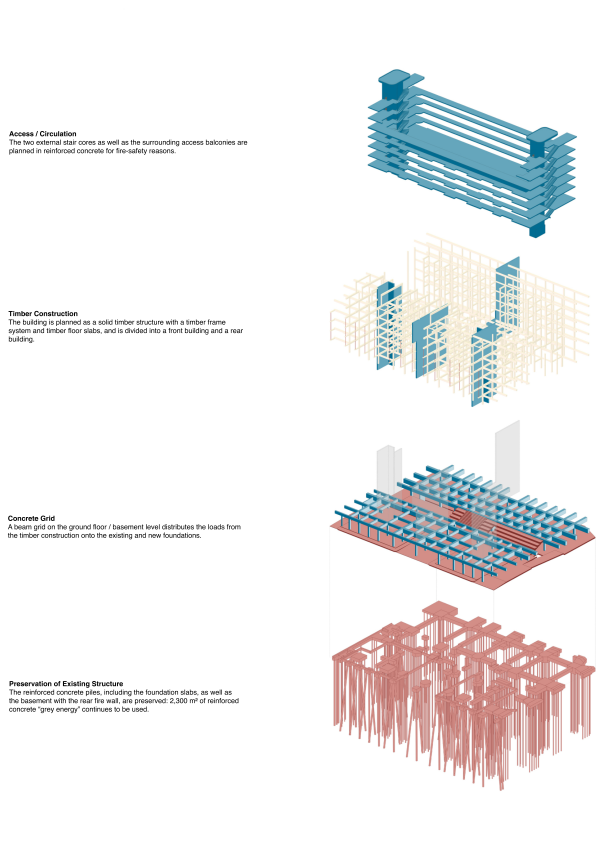
Construction: Adaptive reuse of the existing reinforced-concrete structure with a new timber-hybrid residential extension
Housing model: Resident-owned housing cooperative (Gröninger Hof eG)
Project status: Under construction
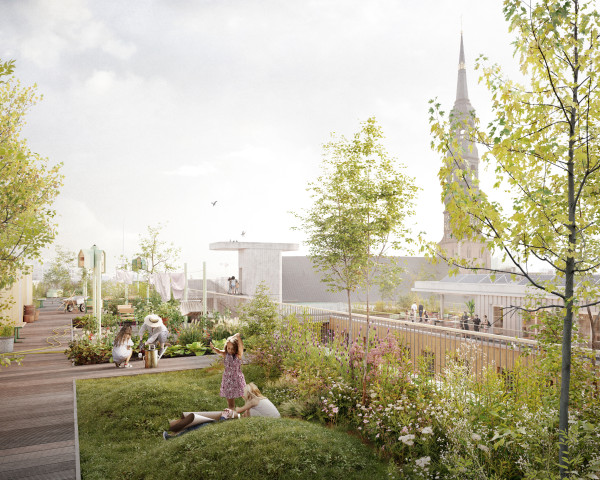
Shared facilities: Workshop, rooftop community room and terrace, guest rooms, shared laundry room, children's playroom, hobby room, fitness room, food storage room, community office, flexible hybrid spaces and publicly accessible cultural spaces.
Key idea: Building the community before building the house through participatory planning, collective governance and shared responsibility.
Building the Community Before Building the House
Before the building is finished, something else is already taking shape.
At Gröninger Hof, future residents meet through planning meetings, workshops, events and working groups. They discuss shared values, participate in decisions and take on collective responsibilities while the building is still under construction.
The house is being built.
So is the community.
Gröninger Hof therefore allows us to think about housing not only as a physical structure, but as a social process shaped by participation, cooperation and care.
01 - Urban Transformation
From Parking Infrastructure to Cooperative Housing
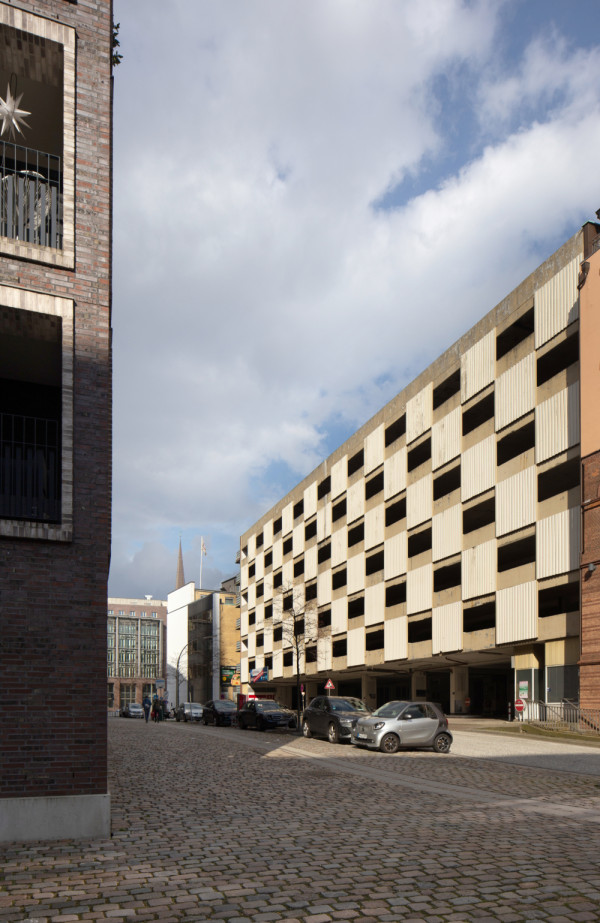
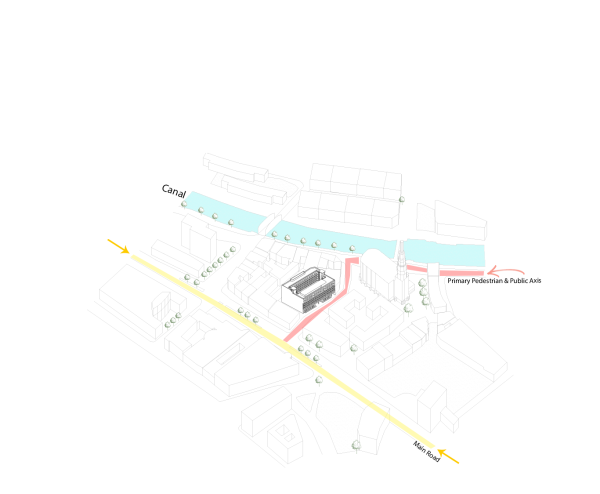
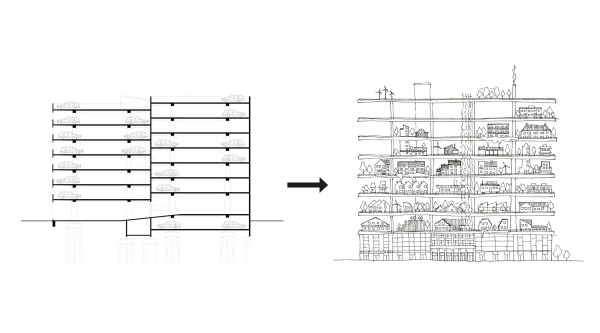
Gröninger Hof emerged from the desire to bring permanent residential life back to Hamburg's historic Altstadt. The project transforms a former multi-storey car park into a cooperative housing development with permanently affordable homes, shared facilities, workspaces and publicly accessible programmes.
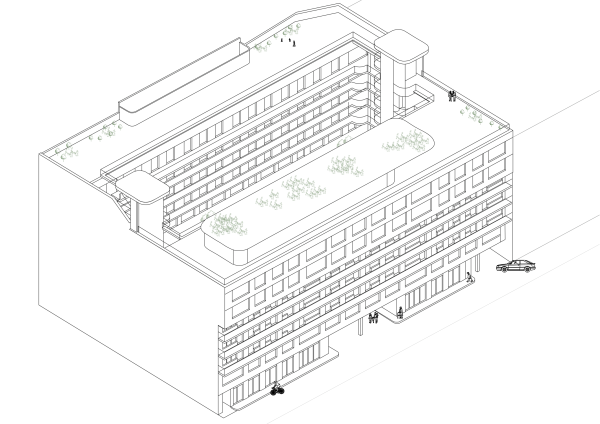
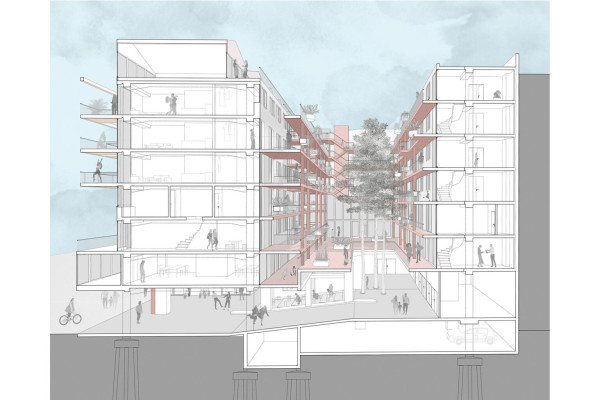
Instead of demolishing the existing structure, the project retains its foundations, basement and reinforced-concrete framework and extends it with a timber-hybrid residential building.
A structure once shaped around cars is given another future.
Infrastructure for private mobility becomes infrastructure for collective life.
Source: Gröninger Hof project information and architectural documentation
02 - Community Formation
Before We Move In, We Begin to Belong
At Gröninger Hof, becoming part of the cooperative means more than applying for a home. Prospective residents attend introductory meetings and take part in discussions and activities before occupation.
Planning meetings, workshops, neighbourhood events and working groups create opportunities to build relationships, discuss shared values and prepare for collective living.
Through these repeated encounters, future residents begin to know one another before they share the completed building.
Community is not waiting at the end of construction. It is being built along the way.
Source: Interviews with members of the Gröninger Hof organisation, 2026
03 - Architecture and Everyday Life
The Home Beyond the Apartment
At Gröninger Hof, domestic life extends beyond the private apartment.
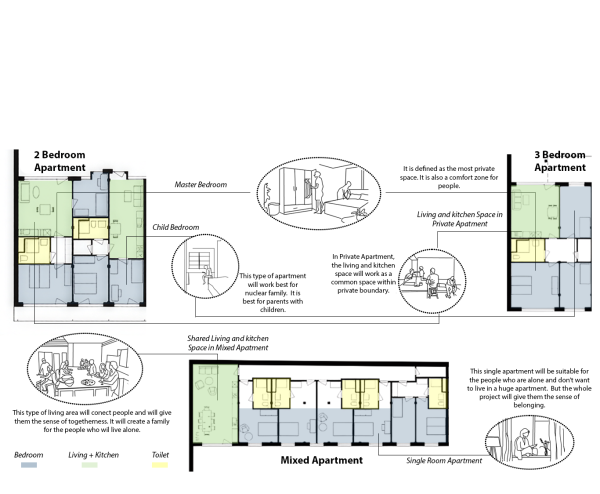
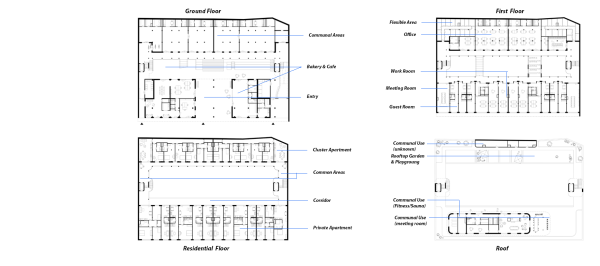
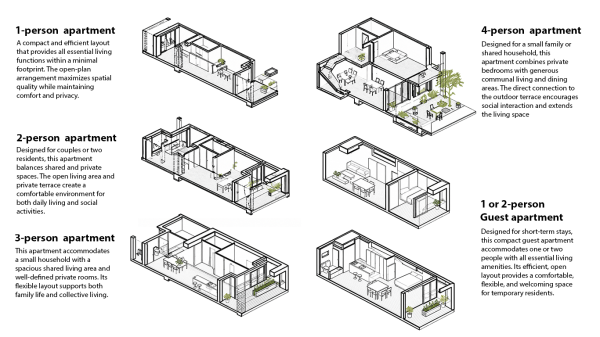
The project combines individual homes with shared facilities including workshops, laundry rooms, guest apartments, co-working spaces, roof terraces, a community room and flexible hybrid spaces. These spaces create opportunities for everyday interaction and collective use.
Some of the hybrid spaces are intentionally left without fixed functions. Their use can change as the needs of the community change. A children's playroom, for example, could later become a music studio or shared workspace.
The building is therefore not imagined as something fixed forever.
It leaves space for the community to change.
Source: Gröninger Hof project information and architectural documentation; interviews, 2026
04 - Governance and Care
Living Together Means Taking Responsibility Together
The architecture of Gröninger Hof is supported by a cooperative structure in which residents collectively participate in decisions about the building and community.
Working groups are responsible for different aspects of collective life, including the workshop, events, laundry and new member selection. An Awareness Group supports communication and conflict resolution before residents move into the building.
Care here is not understood as something that happens automatically. It depends on participation, communication and continued responsibility.
The building provides shared spaces. The community gives them meaning.
Source: Interviews with members of the Gröninger Hof organisation, 2026.
05 - Future Common Use
A Community Still in the Making
Gröninger Hof is still under development. Its future community life therefore cannot yet be fully observed.
What can already be seen is the process leading towards it: people meeting, planning together, forming working groups, developing trust and taking responsibility for a shared project.
The architecture supports this process through shared and adaptable spaces. But the research also shows that spaces alone cannot create community. Their social value depends on how residents use, manage and care for them over time.
The building is still becoming. So is the community
Gröninger Hof suggests that housing can be more than a collection of private homes. It can become an infrastructure for cooperation, care and collective life.
References
- Personal communications (2026). Interviews with two members of the Gröninger Hof organisation.
- Fraser, N. (2016). Contradictions of Capital and Care, New Left Review, 100, pp. 99-117.
- Stavrides, S. and Travlou, P. (2022). Housing as Commons, pp. 1-16.
- Gavaldà, M. and Cattaneo, C. (2022). Feeding Together: The Revolution Starts in the Kitchen, Housing as Commons, pp. 95-108.
- von Mende, J. (2019). The Dispersed Home: Spatial Reallocations between the Private and the Public Domain, OASE, 104, pp. 38-49.
- Gehl, J. (2011). Life Between Buildings: Using Public Space.
- Gröninger Hof Project information and architectural documentation https://groeninger-hof.de/
Authors: Angela Ristovska, Afsana Rashid, Daman Kumar.
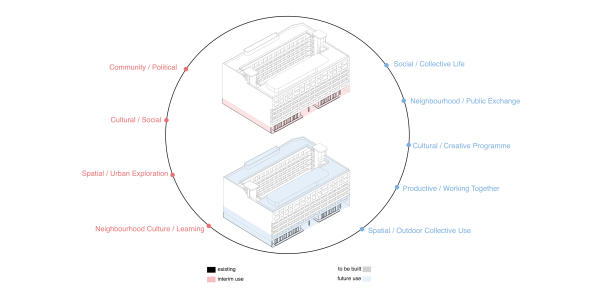
Events
The current events can be divided as:
Community/Political events:
-Architects for Future meetings
Regular activist meetings turn the building into a civic platform for ecological and architectural debate.
-Public discussions / cooperative meetings
Discussion formats make planning, ownership, and urban transformation visible as a collective process.
-“Sold Out” discussi…
groeninger-hof-research-report.pdf
Floor plans - Programme distribution