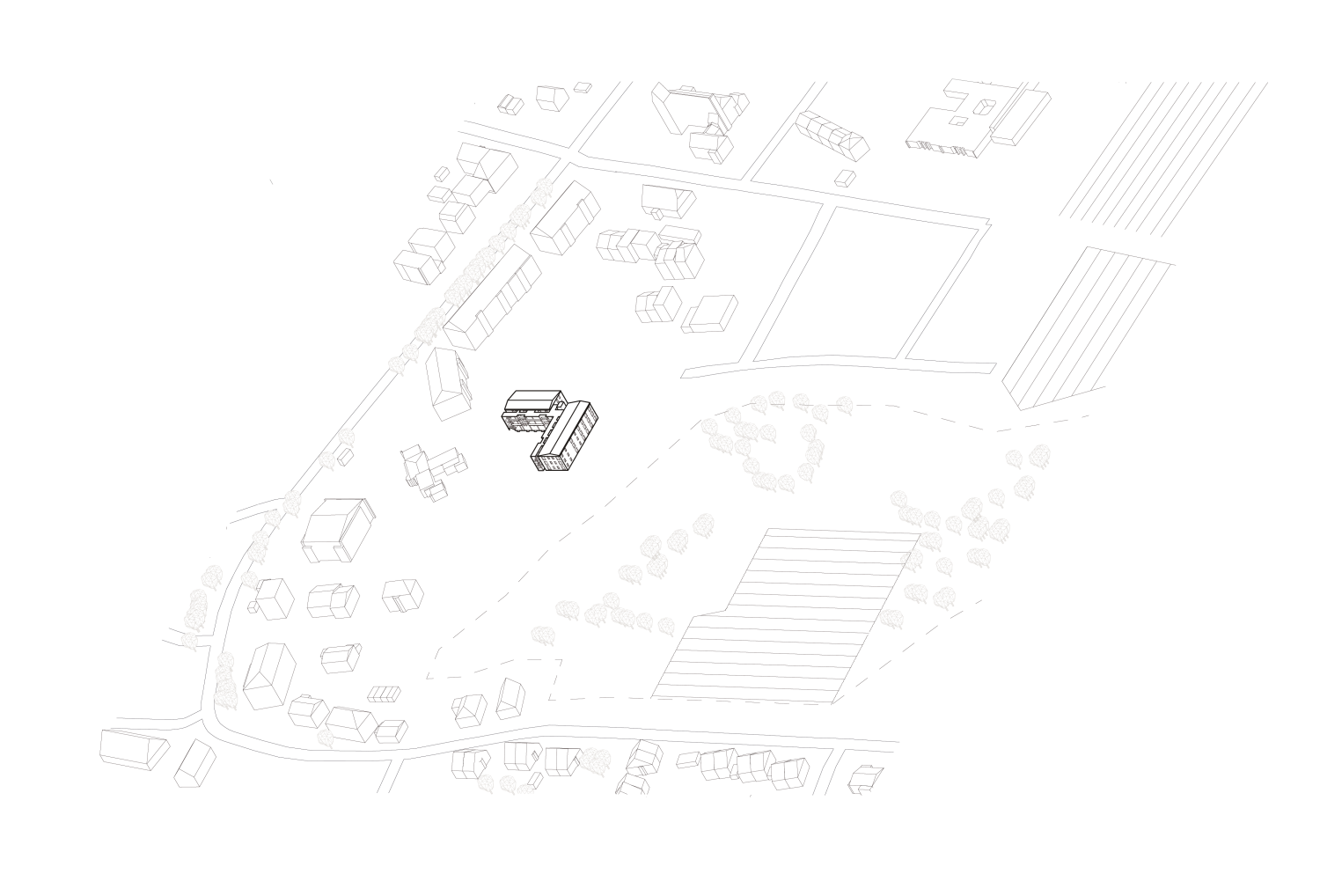
Location: Hamburg Marmstorf, Germany
Use: Collective Housing
Building Type: Intergenerational Housing Project
Architecture: Architekten Limbrock Tubbesing
Completion / Occupancy: 2025
Residential Units: 24 Apartments
Residents: Approximately 60 People
Legal Structure: Self managed Housing Cooperative
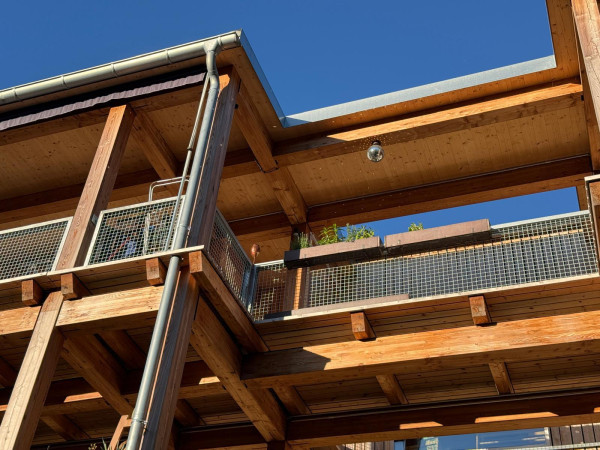
Construction: Timber construction with a community oriented circulation concept
“We wanted to create a courtyard setting and explored what community fostering architecture could look like.”
-resident
Background
The name “Wohnen hoch drei” refers to the three central pillars on which the housing project is based: ecology, economy, and social community. These three aspects are not considered separately but are combined to create a sustainable and socially responsible form of housing.
Wohnen hoch drei is a cooperative, intergenerational housing project located in the district of Harburg in Hamburg. The project emerged from a group of people who wanted to develop a form of housing that combines private apartments with shared spaces, collective responsibility, and long term self governance.
The initiative was founded in 2016. Over several years, the future residents developed the organisational, financial, and architectural framework of the project together. The cooperative became the legal foundation of the development and allowed the group to organise the building collectively while maintaining individual rights of use for each household.
After a long planning and construction process, the project was occupied in 2025. Today, approximately 60 residents of different ages and household structures live in the two residential buildings. The community includes families, couples, single residents, children, and older people.
Architecture and Community
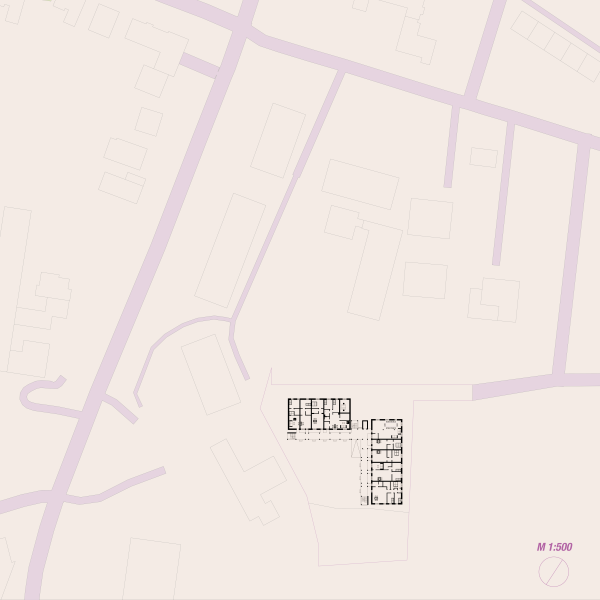
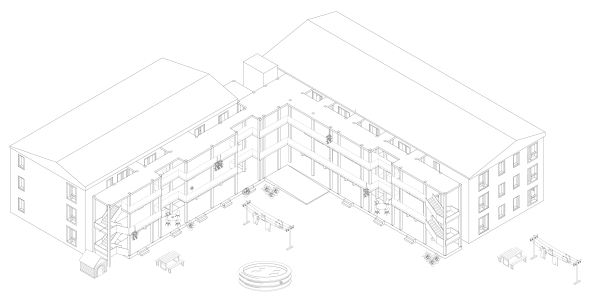
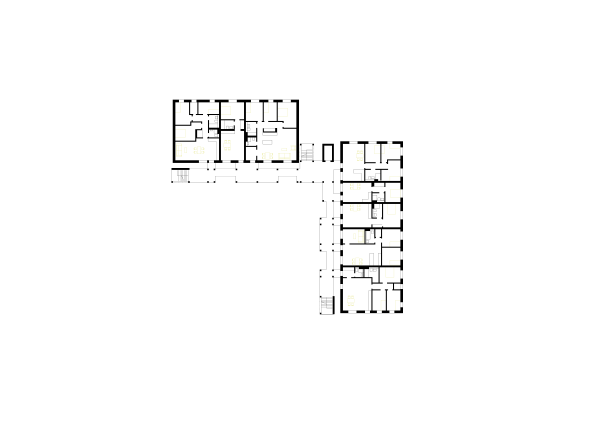
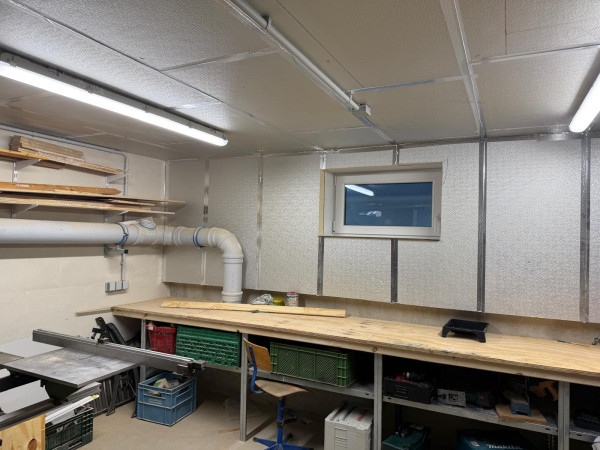
The project consists of two three storey residential buildings containing 24 individual apartments. These private homes are complemented by a range of shared indoor and outdoor spaces. The development includes a common room, a shared office, workshops, bicycle storage, a food cooperative room, a communal garden, and a central courtyard.
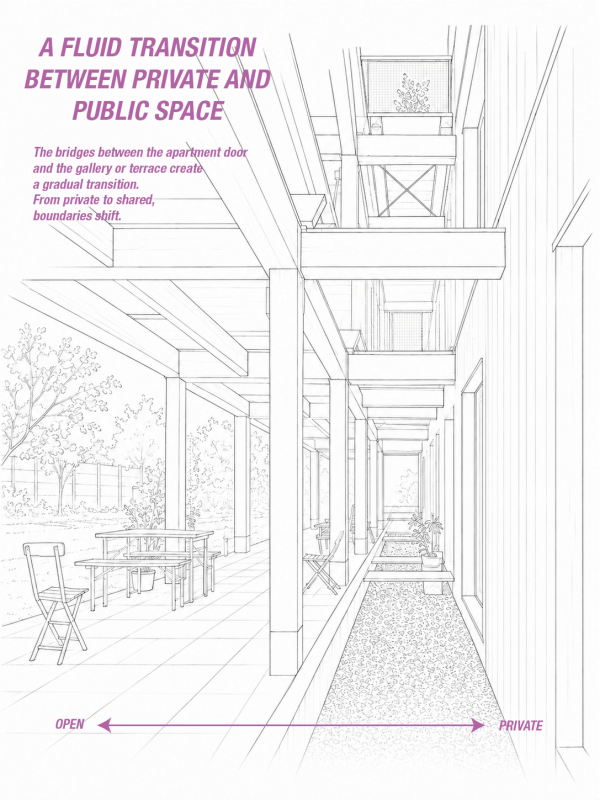
A key element of the project is the arrangement of the two buildings around the courtyard. Rather than being positioned independently, the houses face one another and create a shared centre between them. This spatial configuration supports visual connections, everyday encounters, and informal communication between the residents.
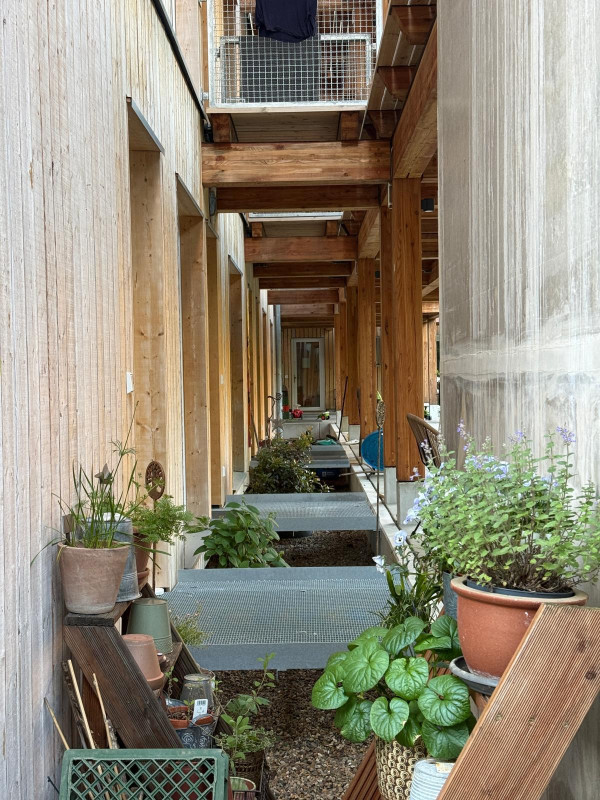
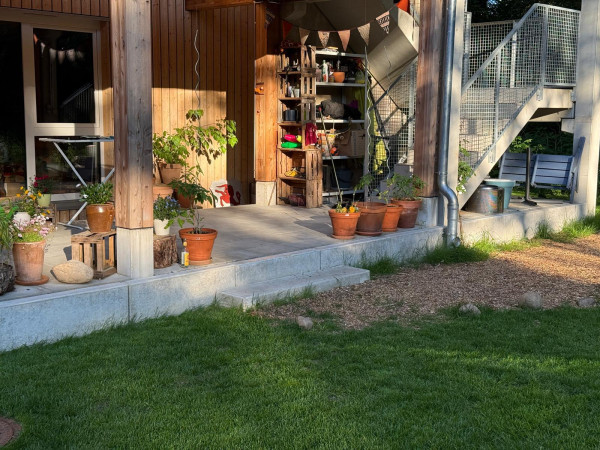
The apartments are accessed through wide galleries. These circulation spaces are more than functional routes. They operate as transitional zones between the private apartment and the wider community. Residents can meet one another, stop for a conversation, observe activities in the courtyard, or use the galleries as informal extensions of their homes.
At the same time, each household has its own apartment and therefore its own private space. The project does not replace individual living with permanent collectivity. Instead, it creates different levels of privacy, proximity, and participation.
A Shared Housing Model
Wohnen hoch drei combines private housing with collectively organised infrastructure. The architecture offers opportunities for interaction, while the cooperative structure provides a framework for shared decision making and responsibility.
The project can therefore be understood as more than a collection of apartments. It is a spatial and social housing model in which the boundaries between private, communal, and shared space are carefully negotiated. Architecture, organisation, and everyday use come together to create a form of living that extends beyond the individual home.
sources: https://www.w3-harburg.de/ and residents
credits: Vanessa Kailan, Nele Misof, Carlota Schick Sendra

Interview
„Wir wollten eine Hofsituation schaffen und haben uns damit beschäftigt, was gemeinschaftsfördernde Architektur sein kann.“
Building the Community Before the Building
How did the community come together?
Long before the first residents moved into the building, the future community had already begun to take shape. What started as a small initiative gradually evolved …
Mehr lesen...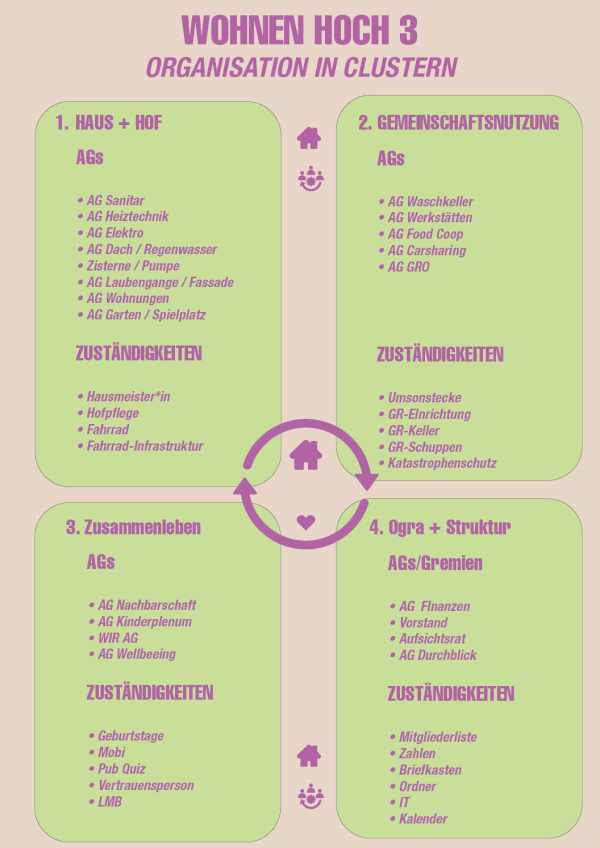

quotes
„Die Gemeinschaft war schon da, bevor das Gebäude fertig war.“
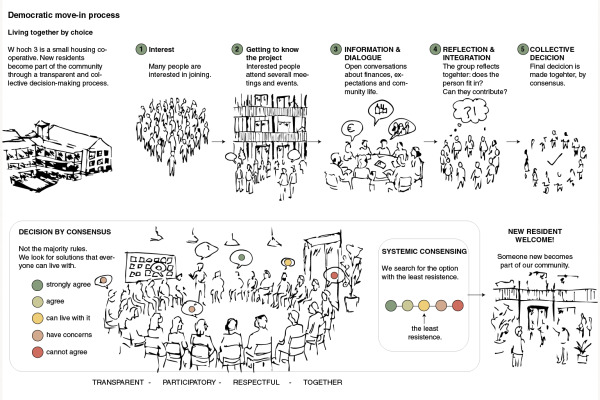
„Ein Einwand wird nicht als Störung gesehen, sondern als Hinweis darauf, dass der Entscheidungsraum noch erweitert werden muss.“
„Irgendwann haben wir gesagt: Wir sind jetzt eine Gruppe.“
„Auf den Laubengängen findet sehr viel Leben statt.“
„Es gibt viel Gemeinschaft, aber auch ausreichend Rückzug.“
*…
Mehr lesen...