When we at Urban Types film during our case studies, and when films represent our case studies, this allows us to show the spaces, materials, and objects—as well as their inhabitants—in relation to one another as they go about their activities. This contextualization is necessary to document and narrate (sub)aspects of the stories contained within, as well as to understand, read, interpret, analyze, and translate them (into images, drawings, etc.).
In doing so, (cinematic) recordings do not depict a single reality, but rather diverse, multifaceted, and varied realities. They tell stories from and about a specific perspective, influenced and shaped by the research question, the chosen frame, the social and cultural backgrounds of the filmmaker and their implicit as well as explicit (prior) knowledge, the actions and reactions of the respective research participants, and ultimately also those of the viewers.
Denzin (2006: 423) describes this as follows: “In every film or photo series, there are four narrative or meaning structures: (1) the visual text, (2) the spoken text, including the photographers’ comments on their images, (3) the narrative that links the visual and spoken texts into a coherent story or situates them within a framework, and (4) the interpretations and meanings that viewers (including social scientists) ascribe to the visual, heard, and narrated texts. No visual text evokes the same associations in all viewers. In the course of engaging with the text, they develop their own distinctive readings and interpretations.” According to Sarah Pink (2013: 35), visual ethnography does not aim for an objective representation of reality. Rather, it aims to depict variations of reality as the researcher has experienced them, while taking into account as sincerely as possible the context in which the knowledge was produced.
Just as films can serve as data for analysis and interpretation, filming can also be used as a method to generate data material (which can then in turn be analyzed and interpreted).
Films as Data Material
What is shown (or not shown) can be traced back to the filmmakers’ individual perspectives, personal experiences, and influences, while simultaneously revealing overarching social conditions, rules, standards, norms, agreements, and experiences (Pink 2013). Decisions made during the filming process—including intuitive ones—already encompass many relevant questions about what is being filmed and the associated social assumptions and conventions. Articulating these questions can therefore shed light on the research subject and help make the research process transparent. In our case—that is, in the cinematic exploration of house and resident biographies—this approach can, for example, examine the apparent dichotomy between private and public:
What do we mean by private spaces and what by public spaces? Which spaces are (too) intimate for us and thus less suitable for showing, and which are socially open and presentable?
Thus, video and film research encompasses both the analysis of the material and the process of its creation and its respective conditions. When interpreting the material, Denzin distinguishes between two different types: “Realistic readings,” which seek to accept what is seen as “reality” and to describe and analyze what is depicted, while “subversive readings” attempt to look beyond the depicted material and thus question the conditions of its creation as well as the positioning or representation of the depicted actors, interpreting and analyzing them (Denzin 2006: 424).
Understanding the production process and the circumstances also enables us to actively utilize this knowledge. We can deliberately subvert it and use it as a stylistic device, or present seemingly banal things in a new way to provoke a process of reflection among viewers regarding supposedly “natural” conditions (Nierhaus 2014:9).
The idea, then, is to generate a cinematic filter that shapes structure and form, through the application of which we observe the situation on site, thereby approaching an answer to the research question while simultaneously formulating new questions.
Filming Procedure
-
(1.) Field Access
Starting from the research question, the researcher-filmmaker approaches the location and subject. Field access is gained through the formulated motif and, in our case, at a specific location and house, including its residents and users. To orient oneself cinematically in the field, it can be helpful to first gain an overview of the situation and one’s own research question and to get to know the house and its residents without the presence of recording equipment. Conversations and observations yield answers to fundamental questions: What do I actually want to film? What is there to see? Which residents and users are present here (physically, through pictures on the walls, in the stories)?
The first recordings can be made, for example, during a tour of the building—depending on what makes sense in the specific research context and how willing the research participants are. For more on this, see Take 2/3. -
(1.1) Obtaining Consent
Although audiovisual data is in everyday use today, the “official” request to record images and video footage for research purposes is still associated with a slightly heightened level of sensitivity. Case law in Germany takes two rights into account: “on the one hand, the right to freedom of research, and on the other hand, the right of personality, or the right to one’s own image derived from it.” (Tuma, Schnettler, Knoblauch 2013: 67) In general, obtaining consent applies here as well. -
(2.) Iterations
In line with the take structure, we at Urban Types work with an iterative, i.e., repetitive, approach. For filming, this means: we start with a few shots, which we review and analyze after recording. By analyzing the footage, we can now assess to what extent what has been filmed addresses the overarching research question. The next steps can then be built upon this. Parallel to shooting, we can create a project in an editing program (e.g., DaVinci Resolve) and see how the shots can be assembled and what emerges from them.
Stringing the individual shots together does not merely have an additive effect; rather, when taken as a whole or through their interconnection, they create something new—a cinematic space that takes shape through the act of viewing or within the viewer.
- (3.) Filming
The distinctive feature of filmmaking is that, compared to photography, writing, drawing, and reading, it can more easily depict and make comprehensible the actions, movements, gestures, facial expressions, and sounds of people and/or the environment. Thus, the film format initially offers certain additional possibilities that simultaneously entail limitations. Every decision in favor of one option is simultaneously a decision against others. It is therefore necessary to determine what will be filmed and how. Where should the camera be positioned? Will there be one or more cameras to capture different angles? Does the camera move with the action, making it dynamic, or does it remain stationary, making it static? Might it be beneficial to separate the audio track from the video track during filming to achieve better quality in each format and then recombine them during editing?
Also important here is the “off-screen” aspect of the image—that is, everything immediately outside the chosen frame. Off-screen sound and noises, protagonists entering and exiting the frame, and objects and people merely glimpsed at the edge of the frame all influence how the image is perceived. Furthermore, it must be taken into account that neither researchers nor filmmakers are uninvolved bystanders. “In the data collection situation of classical participant observation, the observer manipulates the setting. By being physically present, they also assume a social role within the observation group. Through their appearance, their status as an outsider or insider, their social position, and their perhaps barely noticeable participation in existing communication, they become part of the observation group. (Reuter 2012:65).”
When filming, too, we interact with the protagonists and alter the situation under investigation in equal measure.
What and how we film is directly related to the research question of the case; on the one hand, to reduce the volume of data and the effort involved, and on the other hand, to maintain the focus of the investigation (see also “focused ethnography” Knoblauch 2001 in Tuma, Schnettler, Knoblauch 2013). Overall, it is important to consider and evaluate how the various methods (interviewing, filming, observing, researching, photographing, drawing) complement one another and what specific role videography plays in each individual project.
Damals; Heute; Morgen

Video zum Hof
dorffassaden.mp4

Apothekerinnenhaus - Film: Hausbegehung

Folge dem Pfeil

Zug um Zug 2 – Interview


FILM
A Rooms of One's Own - Film
Zug um Zug 2 – Wintermund

Das Haus. Erstes Obergeschoss. Die gemeinschaftlichen Räumlichkeiten. Die Bewohner*innen.
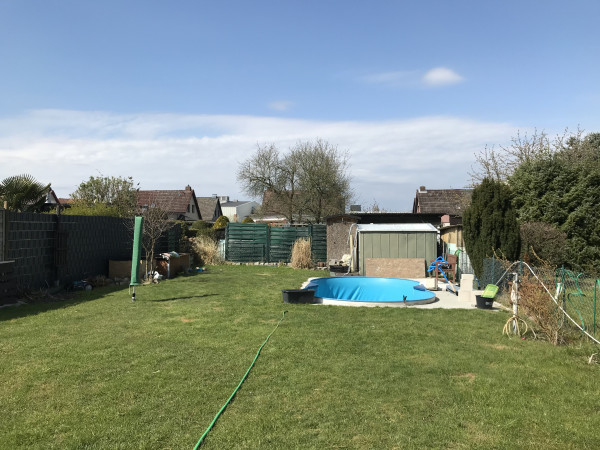
Einblick in den Garten

Wohnen und Arbeiten - Film - Melling/HCU 2019

Auf-Zu-Angelehnt - Film

Fünfgiebelhaus – Film: Handeln

Wand an Wand – Film
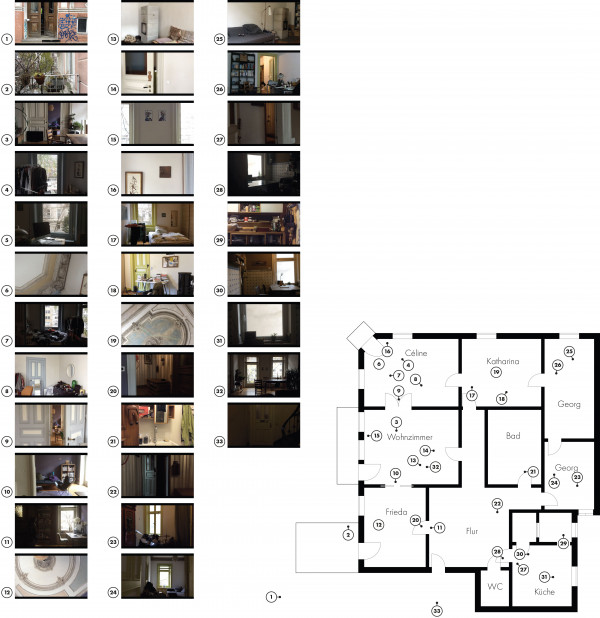
Geplante Gemeinschaft - Film

Hotel Mama + Papa – Film

Direkt am Kanal – Film: Hausbegehung

Seriell-Individuell – Film
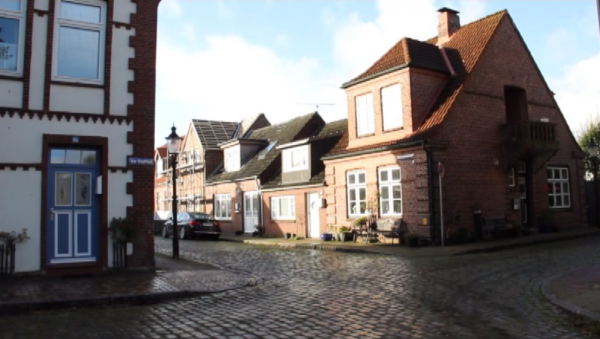
Klein aber fein – Film

Zug um Zug – Film
Gartenbau

Fünfgiebelhaus – Film: Hausbegehung

weichblich, alleinstehend, 60+ – Film
